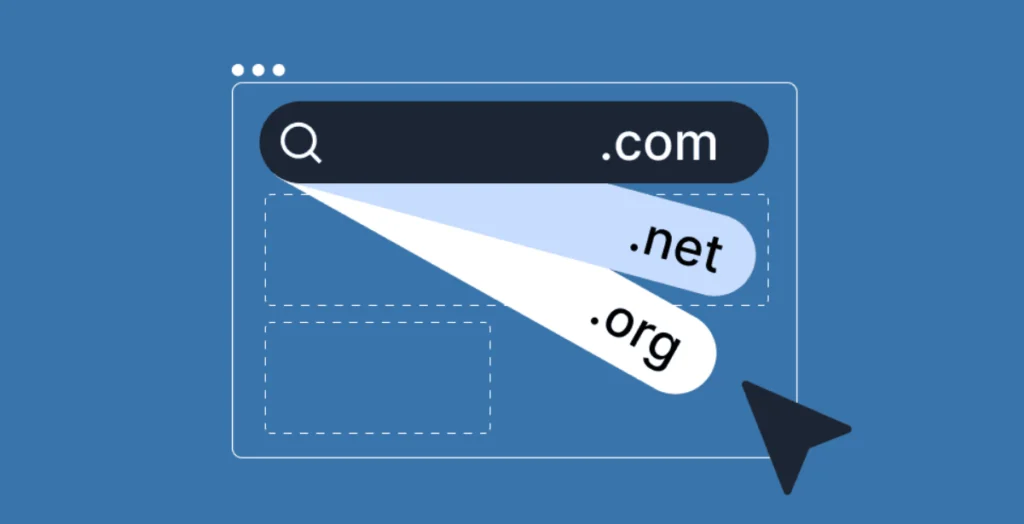
A domain name determines how a business is identified online. The chosen extension influences credibility, reach, and audience perception.
The most common options fall into three categories: .com, new generic TLDs, and country-code TLDs.
Each category serves a different purpose. The correct choice depends on market scope, branding strategy, and long-term plans.
Understanding the functional differences between these options simplifies the selection process.
Characteristics of the .com Domain
The .com extension has been in continuous use since 1985. It remains the most recognized domain extension worldwide.
Market data shows that .com accounts for more than 44 percent of all registered domains.
Users commonly associate .com with established businesses. Many internet users instinctively type .com when entering a website address.
This behavior increases direct navigation traffic.
The .com extension supports nearly all business models. It is used for corporate sites, ecommerce platforms, blogs, and digital services.
Global scalability is a core advantage of .com domains.
Availability remains the main limitation. Most short or keyword-based .com domains are already registered.
High demand also increases acquisition and resale prices.
Businesses searching for premium options often explore .com domains at Spaceship to identify available names and aftermarket listings.
Search competition remains high, as ranking advantages are not tied to extension choice.
Expansion of New Generic TLDs
New generic TLDs emerged to address domain scarcity. Examples include .tech, .app, .shop, and .online.
These extensions allow more descriptive and industry-focused naming.
New TLDs often communicate purpose immediately. A domain ending can indicate sector or functionality at first glance.
This clarity benefits niche projects and startups.
Pricing is usually lower than .com. Availability is higher due to reduced saturation.
Many new TLDs have gained mainstream acceptance.
Perception varies by extension. Some newer options still lack the prestige associated with .com.
Audience familiarity plays a role in trust formation.
Search engines treat all TLDs equally. Domain extension alone does not affect ranking potential.
Content quality remains the primary SEO driver.
Using ccTLDs for Regional Focus
Country-code TLDs represent specific nations or territories. Examples include .us, .de, and .co.uk.
These domains signal geographic relevance.
ccTLDs represent roughly 30 to 40 percent of all registered domains globally. Their usage remains stable.
Local businesses frequently adopt them.
Regional trust increases with ccTLD usage. Users often prefer domains that reflect their country.
Local search visibility also improves.
Expansion limitations exist. A ccTLD may restrict brand perception outside the target region.
International growth becomes more complex.
Registration rules differ by country. Some ccTLDs require local presence or documentation.
Legal research is necessary before registration.
How to Choose the Most Suitable Domain Type
No single extension fits all businesses. Selection should follow practical criteria rather than trends.
The domain name itself remains the primary branding element.
Key decision factors include:
- Business scope:
Global operations benefit from .com. Local services align better with ccTLDs. Niche products often use new TLDs. - Budget constraints:
New TLDs and ccTLDs are typically more affordable. Premium .com domains command higher prices. - Target audience:
Younger or tech-focused audiences accept new TLDs. Traditional audiences prefer .com. Local customers trust ccTLDs. - SEO considerations:
Domain extension does not influence rankings. Content and authority matter more. - Memorability:
Short and simple domains perform better. Availability is more limited in .com spaces.
Previously owned domains require due diligence. Historical usage can affect reputation.
Security measures such as SSL certificates are mandatory.
Brand consistency across platforms matters. Social media availability should be checked before final selection.
Unified branding strengthens long-term recognition.