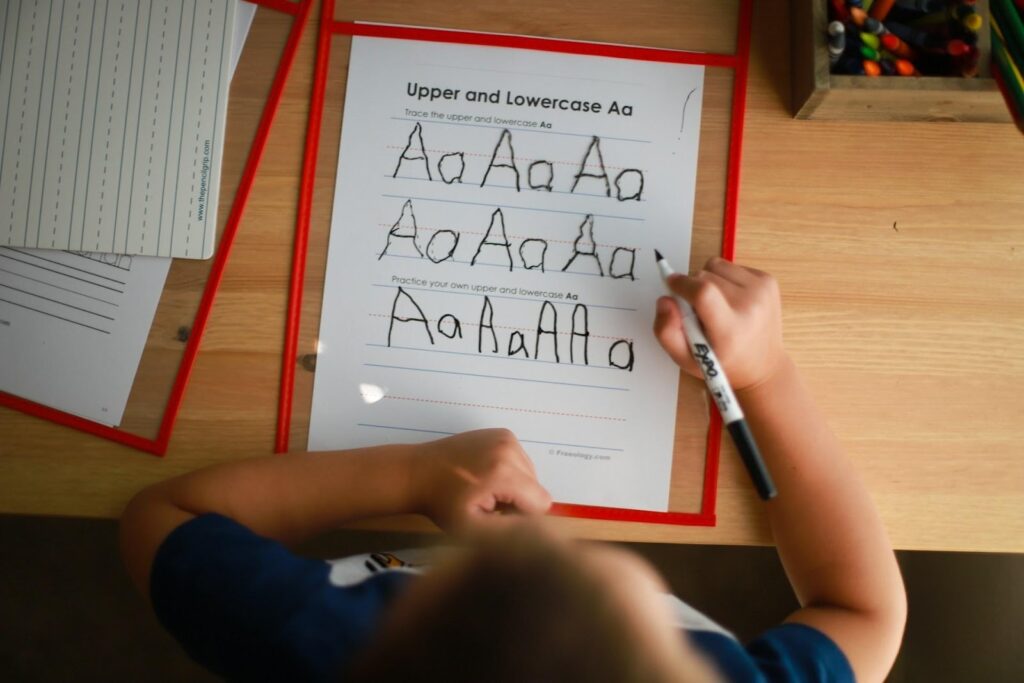
When children enter first grade, writing expectations change quickly. The focus shifts from simply forming letters to communicating ideas on paper. At this stage, many families and teachers introduce structured supports such as 1st grade writing worksheets to help students practise sentences, organise thoughts, and build confidence as writers. While spelling and handwriting are visible parts of this process, they represent only a small portion of what first grade writing is actually teaching.
Writing in first grade plays a deeper role in cognitive, language, and emotional development. It helps children learn how to think, plan, express, and reflect, skills that extend far beyond the mechanics of putting words on a page.
Writing as a Tool for Organising Thought
One of the most important lessons first grade writing teaches is how to organise ideas. When children are asked to write even a simple sentence, they must decide what to say, in what order, and how to make that idea clear to someone else.
This process strengthens executive function skills such as planning and sequencing. Children learn that ideas have a beginning, middle, and end, even in very short pieces of writing. Over time, this mental organisation supports not only writing, but problem-solving and communication in other subjects.
Sentence Structure Builds Language Awareness
First grade writing introduces children to the structure of written language in a more formal way. Writing complete sentences helps students understand how spoken language translates into print. They begin to notice word order, punctuation, and how meaning changes depending on how words are arranged.
This awareness supports grammar development naturally. Rather than memorising rules in isolation, children learn patterns through use. Writing reinforces how sentences work, making later grammar instruction more intuitive and less abstract.
Writing Strengthens Reading Comprehension
Reading and writing develop together, and first grade is where this relationship becomes more visible. When children write sentences, they pay closer attention to sounds, word patterns, and meaning. This deepens their understanding of how words function in context.
Writing also improves comprehension by forcing children to think like readers. When they reread their own work, they notice whether it makes sense, which mirrors the process of monitoring comprehension while reading. Students who write regularly often become more attentive, thoughtful readers.
Building Confidence Through Expression
Beyond academic skills, writing supports emotional development. First grade writing gives children a way to express personal experiences, opinions, and imagination. Being able to put ideas on paper helps children feel heard and capable.
Confidence grows when writing tasks are achievable and supportive. When children see their ideas take shape in sentences, they begin to identify as writers, not just students completing an assignment. This sense of ownership encourages persistence and willingness to try more challenging tasks.
Learning Independence and Responsibility
First grade writing also teaches independence. Unlike shared reading activities, writing often requires children to work on their own, making decisions without immediate guidance. They choose words, check their work, and decide when a piece feels complete.
This independence builds responsibility and self-regulation. Children learn to manage time, stay focused, and follow instructions, skills that are essential throughout their education.
Writing Encourages Metacognition
When children write, they think about their thinking. They plan what to say, monitor whether it sounds right, and revise when something doesn’t work. These moments of reflection introduce early metacognitive skills.
Even simple prompts like “add a detail” or “fix one sentence” encourage children to evaluate their own work. Over time, this self-awareness supports learning across subjects by helping students recognise strategies that work for them.
Creativity Within Structure
First grade writing balances creativity with structure. Children are often given frameworks, sentence starters, prompts, or models, but within those boundaries, they are encouraged to express original ideas.
This balance teaches an important lesson: creativity thrives within constraints. Children learn that writing is not just copying or filling in blanks, but a flexible tool for sharing unique perspectives while still following conventions.
Writing Reveals Learning Needs Early
Writing is also a valuable diagnostic tool. Through writing, teachers can identify gaps in language development, fine motor skills, or comprehension that may not appear during oral activities.
Early identification allows for timely support. Addressing difficulties in first grade can prevent frustration and widening gaps later, when writing demands increase significantly.
What Research Says About Early Writing Instruction
Research consistently shows that writing instruction supports broader literacy development. Findings synthesised by the National Reading Panel highlight that early writing activities contribute to improvements in reading skills, vocabulary development, and overall language proficiency. Writing is not a separate subject; it is a core component of how children learn language.
This research reinforces the idea that first grade writing instruction is about building foundations, not producing perfect work.
Preparing for More Complex Learning Ahead
By the end of first grade, children are expected to write more independently and with greater clarity. The skills they develop during this year, organisation, sentence construction, confidence, and reflection, prepare them for longer texts and more complex thinking in later grades.
Writing becomes a tool for learning rather than a task in itself. Students use writing to explain math reasoning, describe scientific observations, and respond to stories they read.
Writing as a Lifelong Skill
First grade writing teaches far more than spelling and handwriting. It introduces children to written communication as a way of thinking, learning, and expressing identity. When writing instruction focuses on development rather than perfection, children gain skills that support academic success and personal growth.
Understanding the broader role of writing in first grade helps parents and educators set meaningful expectations. Writing at this stage is not about mastering rules, but about building the confidence and cognitive tools that make learning possible long after the first sentence is written.