When was the last time you recorded something you wanted to remember? Maybe it was your mom telling a story from when she was a kid. Maybe it was a voice memo after an idea hit you during a long drive. Maybe it was your kid saying something so funny you grabbed your phone to capture it.
Now here’s the harder question: when was the last time you actually listened to it?
We’re All Sitting on Gold We Never Look At
It’s funny how we do this. We hit record because something feels important in the moment. A story. An idea. A conversation. We tell ourselves we’ll come back to it later. Later never comes.
And it’s not because we don’t care. It’s because audio is a pain. You can’t skim it. You can’t search it. You can’t just pull out the one good part without sitting through everything else. So those files just sit there, taking up space, collecting digital dust.
I’ve got them too. Interviews I did years ago that I swear I’ll transcribe someday. Voice memos full of ideas I was excited about at 3 AM. A recording of my grandmother telling stories at a family dinner that I keep meaning to share with my cousins.
Someday hasn’t arrived yet.
What’s Actually Sitting on Your Phone
Take a minute and think about what you’ve recorded over the years. Not the music. The real stuff.
Maybe it’s your kid’s first words. Maybe it’s a conversation with someone you love, recorded just so you’d always have their voice. Maybe it’s your own thoughts from a hard time, spoken out loud because writing felt like too much effort when you were right in the middle of it.
These aren’t just files. They’re pieces of your life. They’re proof that you were here, that these moments happened, that these people existed and mattered to you.
And right now, they’re basically trapped.
The Thing Nobody Tells You About Audio
Here’s what I’ve learned the hard way: audio files are terrible at being remembered. You can’t flip through them like a photo album. You can’t glance at them and get the gist. To find one thing, you have to listen to everything.
So you don’t. Neither do I. Neither does anyone.
That interview you did that you were so proud of? It’s in a folder somewhere, waiting. Your grandmother’s stories? Your cousins would love to hear them, but sending a long audio file feels like asking them to do work. Those late-night ideas that felt brilliant at the time? You’ll get to them eventually.
Eventually is a liar.
What Changes When Words Get Written Down
I started transcribing some of my old recordings recently. Nothing fancy. Just uploaded them somewhere and let the technology do its thing.
And you know what? Everything changed.
Suddenly I could search for “grandma” and find every story she ever told. I could pull a quote from an interview without scrolling through two hours of audio. I could send my sister a transcript of that conversation with our mom instead of a file she’d never open.
The recordings are still there. I still have the voices, the laughter, the pauses. But now I also have words I can actually use.
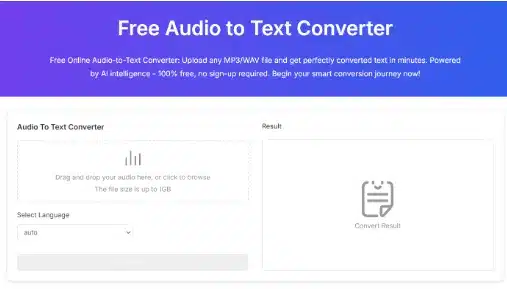
An audio file to text converter does one simple thing: it takes what you said and puts it in a form that doesn’t require a time commitment to access. The technology handles the hard part. You just get your words back, written down, ready for whatever comes next.
What You Can Actually Do With This
Once your recordings become text, they stop being digital clutter. They become:
Something you can search. Looking for that thing your dad said about his first job? Type a word. There it is.
Something you can share. Send a transcript to family members who would never listen to a thirty-minute file. They’ll actually read it. They’ll actually respond.
Something you can keep. Audio files get corrupted. Phones get lost. Formats become obsolete. Text lasts. You can print it, save it, pass it down.
Something you can use. That idea you had in the car? Now it’s not trapped in a voice memo. It’s words on a page you can actually work with.
What You’ll Wish You Had
Here’s the thing about recordings: you don’t miss them until they’re gone. And they don’t have to disappear to become lost. They just sit there, unlistened, unfindable, until the moment comes when you desperately want to hear something specific.
That moment will come. Maybe it’s after someone passes. Maybe it’s when your kid asks about something you once told them. Maybe it’s when you need your own words back from a younger version of yourself.
By then, it’s too late to organize. By then, you’re digging through files, hoping, usually failing.
Learning how to convert audio to text isn’t complicated. It’s not time-consuming. It’s just a way of making sure that when that moment comes, you can actually find what you’re looking for.
Start With Just One
You don’t need to transcribe everything this weekend. That’s overwhelming and nobody has time for that.
Just pick one recording. The one that matters most. The one you’d be most heartbroken to lose.
Turn it into text. See how it feels to have those words in front of you, readable, searchable, real. See how easy it is to share with someone who needs to hear it.
Then decide what’s next.
The Voice You’ll Want to Hear Again
Someday, you’ll want to hear that person’s voice again. Someday, you’ll want to remember exactly what you were thinking at this moment in your life. Someday, you’ll be grateful for every recording you made.
But between now and someday, those recordings need to be findable. They need to be accessible. They need to be more than just files you scroll past.
A simple tool that converts audio to text doesn’t replace the original. It just makes sure you can always find what matters.
And really, isn’t that what you wanted when you hit record in the first place?