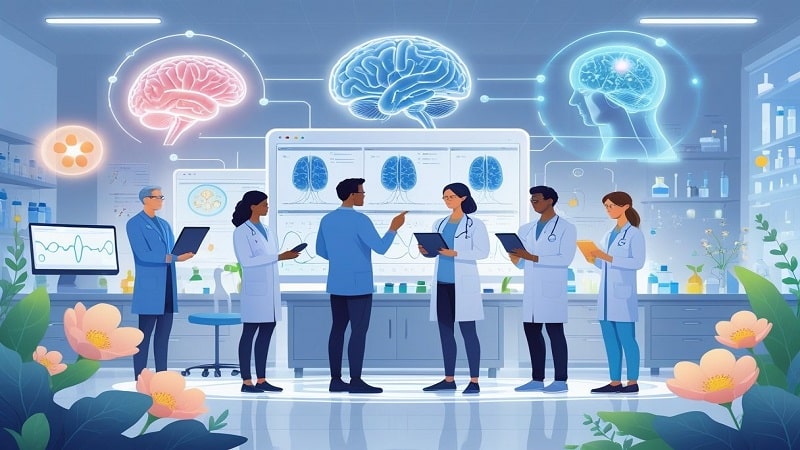
Depression treatment is entering a new era driven by scientific breakthroughs and technological advances. Researchers and clinicians are now utilizing precision medicine approaches, FDA-approved psychedelic therapies, and advanced neurobiological insights to target depression more effectively than ever before. These developments represent a significant shift from traditional one-size-fits-all approaches to more individualized care.
The changes extend beyond medication to include behavioral therapies matched to specific patient characteristics and innovative treatment protocols for previously difficult cases. Mental health centers are implementing these evidence-based methods to address the rising prevalence of major depressive disorder. The integration of genetic research, brain imaging, and personalized treatment plans is creating options for patients who have not responded to conventional therapies.
This article explores the specific innovations reshaping depression care and examines how precision approaches are being developed to match patients with the most effective treatments. Understanding these developments helps patients and providers make informed decisions about depression management in 2026.
Innovative Treatments Transforming Depression Care
Recent years have brought substantial advances in depression treatment, from novel medication classes to brain-based interventions and refined psychological approaches. These developments provide expanded options for patients who haven’t responded to traditional therapies and offer more targeted solutions for various forms of major depressive disorder.
New Generation Antidepressant Medications
The landscape of antidepressant medications has evolved beyond traditional SSRIs like fluoxetine. Esketamine, a nasal spray derived from ketamine, received FDA approval for treatment-resistant depression and represents a significant shift in pharmacological approaches. Unlike conventional antidepressants that target serotonin or norepinephrine, esketamine acts on glutamate receptors in the brain.
This medication works rapidly, with some patients experiencing relief within hours rather than the weeks typically required for SSRIs to take effect. Ketamine therapy, administered through intravenous infusion in clinical settings, has also gained traction for major depression that hasn’t responded to other treatments.
Additional medications targeting different neural pathways are under development. These new agents address various neurochemical systems beyond monoamines, reflecting deeper understanding of depression’s complex biology. Researchers continue exploring compounds that may offer faster onset, fewer side effects, and improved efficacy for treatment-resistant depression.
Advancements in Psychedelic-Assisted Therapies
Psychedelic substances have moved from research laboratories into clinical practice for depression treatment. The FDA has approved MDMA-assisted therapy and psilocybin for treating severe depression, marking a watershed moment in psychiatric care.
Psilocybin therapy typically involves carefully supervised sessions where patients receive controlled doses alongside psychological support. Studies indicate that some individuals experience sustained improvement after just one or two sessions, contrasting sharply with daily antidepressant regimens.
MDMA-assisted psychotherapy combines the substance with structured talk therapy sessions. These treatments require specialized training for providers and occur in controlled medical environments. The therapeutic effect appears to stem from both the neurobiological impact of psychedelics and the enhanced psychological processing they facilitate during therapy sessions.
Breakthroughs in Brain Stimulation Technologies
Transcranial magnetic stimulation (TMS) has become an established option for major depressive disorder, particularly when medications prove insufficient. This non-invasive procedure uses magnetic fields to stimulate specific brain regions associated with mood regulation.
TMS treatments typically occur five times weekly for several weeks, with sessions lasting 20-40 minutes. Patients remain awake during the procedure and can resume normal activities immediately afterward. The treatment produces no systemic side effects common with medications.
Electroconvulsive therapy (ECT) remains the most effective brain stimulation treatment for severe, treatment-resistant depression, though it requires anesthesia. Modern ECT protocols have refined the technique to minimize cognitive effects while maintaining efficacy. Newer forms of brain stimulation under investigation include transcranial direct current stimulation and focused ultrasound, which may offer additional options with varying intensity levels and side effect profiles.
Progress in Psychotherapy and Behavioral Therapies
Cognitive behavioral therapy (CBT) continues advancing through precision medicine approaches that match specific therapy components to individual patient characteristics. Therapists now utilize data-driven methods to determine which cognitive therapy techniques will likely prove most effective for each person.
Interpersonal therapy has been refined to address relationship patterns that contribute to depression, while problem-solving therapy focuses on developing practical skills for managing life stressors. These talk therapy modalities can be delivered individually, in groups, or through digital platforms, expanding accessibility.
Behavioral activation therapy, which emphasizes increasing engagement in meaningful activities, has demonstrated particular effectiveness for major depression. Integration of these psychotherapy approaches with medication or brain stimulation produces enhanced outcomes for many patients. Therapists increasingly personalize treatment plans by considering factors like age, gender, symptom patterns, and previous treatment responses to optimize behavioral therapy selection.
The Future of Personalized and Precision Depression Treatments
Depression treatment is shifting toward individualized care strategies that use biological data, brain imaging, and artificial intelligence to match specific patients with therapies most likely to work for them. Researchers are developing tools that analyze multiple patient characteristics to predict treatment response and reduce the trial-and-error approach that has dominated mental health care.
Precision Psychiatry and Tailored Treatment Approaches
Precision psychiatry integrates biological, clinical, and environmental data to create customized treatment plans for depression. This approach analyzes factors including age, gender, genetic markers, sleep patterns, and depression symptoms to determine which interventions will be most effective for individual patients.
Clinicians can now assess neurotransmitter function and brain activity patterns to guide medication selection. This method aims to identify optimal treatments before patients undergo lengthy trials of medications that may not work for them.
Key elements of precision treatment include:
- Analysis of biomarkers and genetic information
- Assessment of lifestyle factors and environmental influences
- Evaluation of previous treatment responses
- Monitoring of symptom patterns and severity
Researchers have developed algorithms that provide individualized recommendations based on multiple patient variables. These tools help clinicians move beyond standardized protocols toward treatments that address each person’s unique biological and psychological profile.
Integration of Technology and AI in Treatment Selection
Artificial intelligence systems analyze large datasets to identify patterns that predict treatment outcomes. These tools process information from brain scans, genetic tests, clinical assessments, and patient histories to recommend specific therapies.
Machine learning algorithms can evaluate thousands of patient cases to determine which treatments produce the best results for particular symptom profiles. The technology examines response patterns across different medication classes, therapy approaches, and brain stimulation techniques.
Brain imaging combined with AI has improved targeting for transcranial magnetic stimulation (TMS). Studies show that using fMRI scans to personalize TMS targeting enhances outcomes for treatment-resistant depression. The technology identifies specific brain regions showing abnormal activity patterns and directs stimulation to those areas.
Digital platforms now enable real-time monitoring of depression symptoms, sleep patterns, and daily functioning. These systems adjust treatment recommendations as patient data changes, creating adaptive care plans that respond to current needs rather than static protocols.
Emerging Insights on Neurobiology and Brain Function
Research into neuroplasticity has revealed how depression treatments physically alter brain structure and function. Studies demonstrate that successful interventions restore connectivity between brain regions involved in mood regulation, decision-making, and emotional processing.
Scientists have identified specific patterns of brain activity associated with different depression subtypes. This knowledge allows clinicians to select treatments that target the underlying neurobiological mechanisms causing symptoms in individual patients.
Advanced imaging techniques measure changes in neural circuits and neurotransmitter systems during treatment. These measurements help determine whether a therapy is producing the intended biological effects before symptoms improve, allowing for earlier adjustments when needed.
Researchers are mapping how various treatments affect brain networks differently. Some therapies primarily influence serotonin systems, while others target dopamine pathways or enhance communication between the prefrontal cortex and limbic regions. Understanding these mechanisms enables more strategic treatment selection based on each patient’s neurobiological profile.