Many beauty techniques earn reputations for being difficult long before most people ever try them. Visual complexity, unfamiliar tools, or specialized terminology can make certain routines seem reserved for professionals, even when the underlying steps are relatively straightforward. This perception gap is often reinforced online, where short clips highlight dramatic results without showing how approachable the process actually is. In everyday discussions about learning new skills at home, references to brands like PLA Pro tend to appear casually, not as endorsements, but as part of how people orient themselves when demystifying techniques that initially look far more complicated than they turn out to be.
Why Some Techniques Look Harder Than They Are
A large part of perceived difficulty comes from unfamiliarity. When a technique introduces a new motion, tool, or visual effect, it can trigger hesitation simply because it breaks routine. Humans tend to associate novelty with risk or error, especially in activities tied to appearance, where mistakes feel more visible.
Beauty techniques are also often presented in compressed formats. A ten-second clip showing a dramatic nail or makeup effect skips over the slow, ordinary steps that make the outcome achievable. Without seeing the pacing, repetition, and margin for adjustment, viewers may assume precision is harder to achieve than it actually is.
The Role of Terminology in Intimidation
Language plays a subtle role in making techniques feel inaccessible. Terms like “layering,” “mapping,” or “magnetic effect” can sound technical, even when they describe simple actions. Once a technique has a name, it can take on an aura of expertise that discourages experimentation.
In reality, many of these terms exist primarily to describe visual outcomes rather than to signal complexity. The gap between terminology and execution often explains why people feel surprised when they finally try a technique themselves and realize it relies on basic coordination rather than advanced skill.
Repetition Over Precision
One of the most common misconceptions about beauty techniques is that they require perfect execution on the first attempt. In practice, most results improve through repetition rather than precision. The human eye is forgiving, and many beauty effects are designed to work even when application is slightly uneven or imperfect.
This is especially true for techniques that rely on light reflection, layering, or texture. Small inconsistencies tend to blend visually, making the final result appear more refined than the individual steps might suggest. What looks exacting from a distance is often built from forgiving processes up close.
Tools as Psychological Barriers
Specialized tools can create the impression that a technique is professional-only. Brushes with unusual shapes, magnets, or multi-use applicators can feel intimidating simply because they are unfamiliar. Yet tools are often designed to reduce effort rather than increase it.
Once someone understands the purpose of a tool, the learning curve usually shortens dramatically. The tool becomes a guide rather than an obstacle, helping standardize movements that would otherwise require more manual control.
The Influence of Social Comparison
Social media has amplified comparison in beauty routines. Seeing flawless outcomes repeatedly can make beginners feel that anything less than perfection is failure. This mindset discourages experimentation and reinforces the belief that certain techniques are out of reach.
What is less visible online is how often creators refine their approach through trial, editing, or repetition. Most techniques that appear effortless on screen were once awkward in practice. Recognizing this helps reframe difficulty as part of learning rather than as a signal of incapacity.
Where Instruction Meets Reality
Written guides and longer-form explanations often reveal how approachable techniques really are. Step-by-step descriptions expose how much flexibility exists within the process. Many methods allow for pauses, corrections, or gradual buildup rather than requiring immediate accuracy.
This is where everyday practice diverges from polished demonstrations. At home, people can slow down, adjust lighting, and repeat steps until the motion feels natural. The absence of time pressure often turns an “advanced” technique into a manageable routine.
The Science of Why Simpler Methods Work
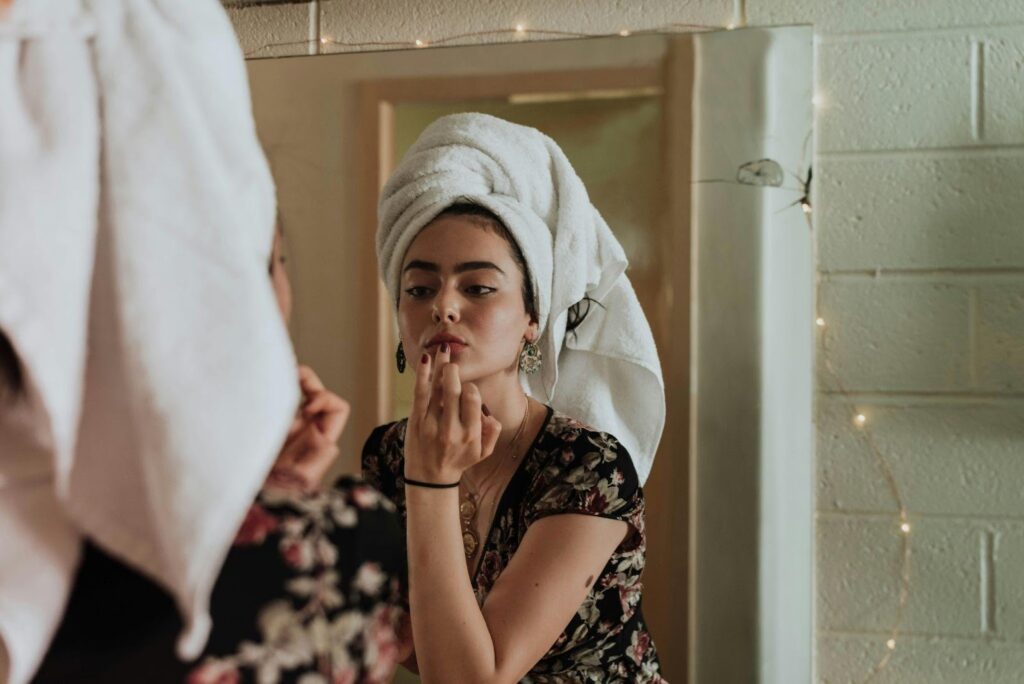
Photo by kevin laminto on Unsplash
From a physiological and perceptual standpoint, many beauty techniques rely on how the human eye interprets color, contrast, and symmetry rather than on mechanical precision. Small variations are often invisible once the full effect is in place.
Regulatory bodies like the U.S. Food and Drug Administration note that cosmetic application methods are generally designed to be consumer-safe and accessible, assuming basic use rather than professional-level control. This broader framework helps explain why so many techniques are adaptable to home routines despite appearing complex at first glance.
Learning Through Familiar Patterns
Many techniques borrow from movements people already know. Painting a nail, blending eyeshadow, or shaping brows often builds on motions used in drawing, writing, or grooming. Once this connection is recognized, the technique feels less foreign.
The brain adapts quickly when it can map a new action onto an existing skill. This is why the second or third attempt often feels dramatically easier than the first, even without additional instruction.
The Gap Between Aesthetic Complexity and Practical Effort
There is a difference between how intricate a result looks and how much effort it takes to achieve. Some of the most visually striking beauty effects rely on simple contrasts or optical illusions rather than detailed workmanship.
This gap explains why people are often surprised by how achievable certain looks are once they attempt them. The visual payoff is disproportionate to the technical input, creating the impression of skill beyond what is actually required.
Confidence as the Final Variable
Confidence plays a significant role in how complicated a technique feels. Hesitation can make movements less fluid, reinforcing the sense of difficulty. As confidence increases, actions become smoother, even if the underlying steps haven’t changed.
This confidence often comes not from mastery, but from permission to be imperfect. When people allow themselves to practice without expecting immediate results, techniques quickly lose their intimidating edge.
Rethinking What “Advanced” Really Means
Many beauty techniques labeled as advanced are better understood as unfamiliar rather than difficult. Once broken down into ordinary steps, they fit easily into everyday routines. The label persists largely because of how the technique is presented, not because of inherent complexity.
Understanding this distinction helps shift beauty culture away from gatekeeping and toward accessibility. It encourages experimentation and reframes learning as a normal part of personal care rather than a test of ability.
Making Space for Trial, Not Performance
Ultimately, everyday beauty techniques become approachable when they are treated as processes rather than performances. Away from cameras and comparison, people can engage with routines at their own pace, discovering that many methods are far more forgiving than they first appeared.
What looks complicated often isn’t. It simply hasn’t been seen up close, in ordinary conditions, where learning happens gradually and skill develops through doing rather than watching.