

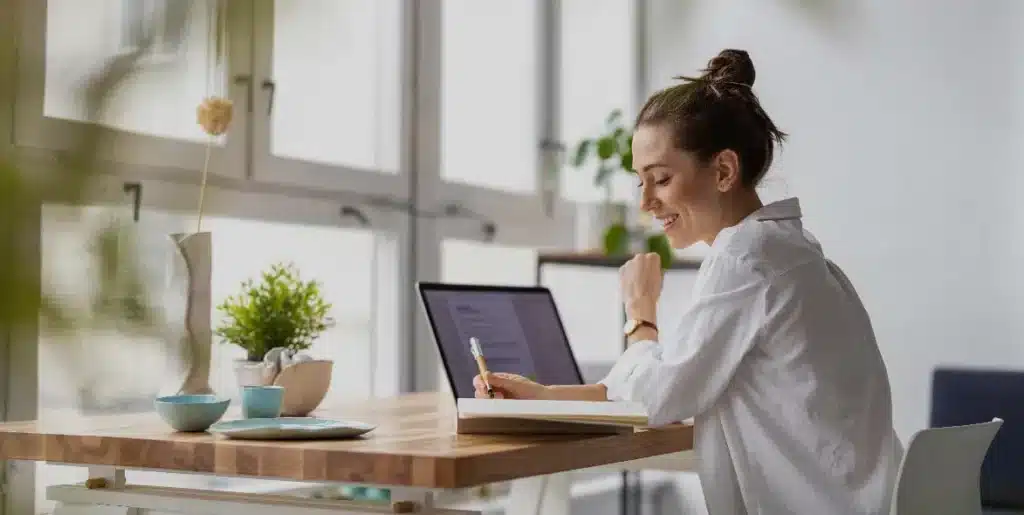
Not so long ago, most of us treated home as a place we returned to after work, somewhere to rest, eat, and disconnect, while the real “functional” part of life happened elsewhere, in offices, cafés, or shared spaces. Then remote work began to change that structure in a way that didn’t feel dramatic at first, but over time completely reshaped how we see and use our homes. The same space that once served as a place for downtime suddenly had to support focus, productivity, comfort, and even creativity, and as that shift happened, our buying habits began to change just as naturally. This shift is not just something we feel in daily life — it is clearly reflected in real data. According to research from Gallup, around 3 in 10 employees in the United States now work remotely full-time, while more than half follow a hybrid model, which means millions of people are actively reshaping their homes to support work. As remote and hybrid work become long-term expectations rather than temporary solutions, the home naturally turns into a space that needs to function, not just exist.
We didn’t sit down and decide to transform our homes all at once, but we started noticing what didn’t work, whether it was an uncomfortable chair, poor lighting during video calls, or constant background noise, and each small inconvenience pushed us toward making adjustments. Over time, those adjustments turned into a completely different approach to what we consider “necessary” for home life.
We Started Buying for Function, Not Just Comfort
One of the most noticeable changes is how many of us shifted from buying things that simply looked good to buying things that actually worked well for everyday use, especially as the line between work and personal life blurred. A kitchen table that once felt perfectly fine suddenly became a workspace for hours each day, which made ergonomics, lighting, and even screen placement more important than aesthetics alone. This shift is also clearly visible in market trends. According to insights from Statista, demand for home office furniture and equipment increased significantly during the rise of remote work, with categories such as ergonomic chairs, desks, and monitors showing strong double-digit growth. Even after the initial surge, interest in these products remains consistently high, which suggests that people are not simply reacting to a temporary change, but building a long-term environment around how they now live and work.
People began investing in better chairs, adjustable desks, and monitors not because they wanted to upgrade their setup, but because they needed to feel comfortable and productive in the same environment for long periods of time. Even small details, like proper lighting for video calls or noise-canceling headphones, became essential rather than optional. The idea of “home shopping” shifted from occasional decoration to ongoing optimization, where every purchase had a clear purpose tied to daily experience.
The Rise of Multi-Purpose Spaces
As remote work became part of everyday life, many of us realized that our homes were not designed for a single function anymore, and that forced a different way of thinking about space and the things we bring into it. A living room could no longer be just a place to relax, and a bedroom often had to double as a workspace, which meant that flexibility became more important than fixed design.
This is where purchasing behavior started to reflect a need for adaptability, with more people choosing furniture and tools that could serve multiple purposes without making the space feel cluttered. Foldable desks, modular storage, and compact equipment became more appealing because they allowed us to switch between “work mode” and “rest mode” without needing entirely separate rooms. Instead of filling space with more items, the focus shifted toward choosing the right ones that could support different parts of the day.
Online Shopping Became Part of the Routine
As the need for constant adjustments grew, so did reliance on online shopping, because it became the fastest and most convenient way to improve the home environment without interrupting work. Instead of planning large shopping trips, many people began making smaller, more frequent purchases, responding to immediate needs as they appeared. This pattern aligns with broader e-commerce trends. Global retail data shows that online shopping grew rapidly during the shift to remote work, with some periods seeing growth rates above 20%, especially in categories related to home improvement, electronics, and workspace upgrades. For many people, ordering items online has become part of the daily routine, just like checking messages or attending meetings.
However, this also introduced a new kind of friction, especially when managing multiple deliveries from different stores and carriers. Waiting for essential items, tracking their progress, and dealing with delays became part of everyday life, and this is where clarity started to matter just as much as convenience. When checking a shipment using Nova Poshta tracking, it becomes possible to follow the entire delivery journey in one place, even if it moves between different logistics networks, which removes the need to constantly search for updates across multiple sources. That kind of visibility doesn’t just save time, it reduces the small, ongoing tension that comes from not knowing when something will arrive.
We Became More Intentional With What We Buy
One of the clearest changes many of us have felt is that purchases at home stopped being random and started becoming very specific, often tied to a real problem we experience every single day. Instead of buying something just because it looks good, people began upgrading things that directly affect comfort and productivity, and this is easy to see in real-life examples. Someone who spent weeks working from a kitchen chair eventually replaces it with something like the Herman Miller Aeron, not because it’s trendy, but because back pain becomes impossible to ignore after a few long days of calls and deadlines. Others switch from working on a laptop to adding a monitor like the LG UltraFine Display, simply because staring down at a small screen for hours stops feeling sustainable.
Lighting is another area where this shift becomes obvious, because instead of relying on whatever is already in the room, people start choosing something that actually supports how they work, like a focused desk lamp such as the BenQ ScreenBar, which reduces eye strain during long sessions. Even smaller upgrades, like organizing cables with simple systems or adding a proper laptop stand, begin to matter because they remove daily friction that builds up over time. These are not big, dramatic purchases, but they solve real, repeated problems, and that is exactly why they stick.
The Emotional Side of a Functional Home
What becomes very clear after these changes is that a functional setup is not just about productivity, but about how we feel throughout the day, because the environment directly affects energy, focus, and even mood. Many people recognize that moment when working from bed or a couch starts to blur the line between rest and work, making it harder to concentrate during the day and harder to relax in the evening. That’s why creating even a small dedicated workspace, even if it’s just a corner with a proper chair and desk, can completely change how the day feels.
At the same time, the opposite scenario is just as familiar, where an unorganized or uncomfortable space leads to constant distraction, fatigue, and a feeling that the workday never really ends. The difference is not theoretical—it’s something people experience almost immediately after making a few targeted changes. Once the space supports both focus and rest, it becomes easier to switch between those states without carrying stress from one into the other, which is something many of us didn’t realize was missing before.
A New Way of Thinking About Everyday Life
Remote work didn’t just change where tasks happen, it changed how we evaluate everything around us, because the home is no longer static and finished, but something that keeps evolving based on daily needs. Instead of treating purchases as occasional upgrades, people now make decisions more continuously, responding to friction as soon as it appears, whether it’s improving lighting for calls, upgrading internet setup, or finding better ways to manage deliveries that arrive more frequently than before. Surveys also show that this behavior is not slowing down, as a large percentage of remote and hybrid workers report that they continue to invest in improving their home environment even after adapting to the new routine. This indicates that the shift is no longer temporary, but part of a long-term change in how people approach everyday life at home.
This is especially noticeable in how even small inconveniences are handled differently, because instead of tolerating them, people look for solutions that simplify the experience. The expectation becomes very clear over time: anything we bring into the home should serve a purpose and make life easier, not add extra steps or complications. That mindset continues to influence decisions, from larger investments to the smallest everyday items.
When Home Finally Starts to Feel Right
What all of these changes lead to is not a perfect setup, but a space that feels aligned with how we actually live, rather than how it was originally designed. The transformation doesn’t happen all at once, but through small improvements that gradually remove friction and make daily routines smoother. A better chair reduces fatigue, proper lighting improves focus, an organized desk removes distractions, and together these elements create a noticeable shift in how comfortable and efficient the space feels.
For many people, this is where the biggest realization happens, because instead of adapting ourselves to an inconvenient environment, we start shaping that environment around us, and once that balance is reached, home no longer feels like a compromise between work and rest, but a place where both can exist without conflict, which is exactly what remote work has been quietly pushing us toward all along.


